Mitákuye Oyás’iŋ
Jul 11, 2026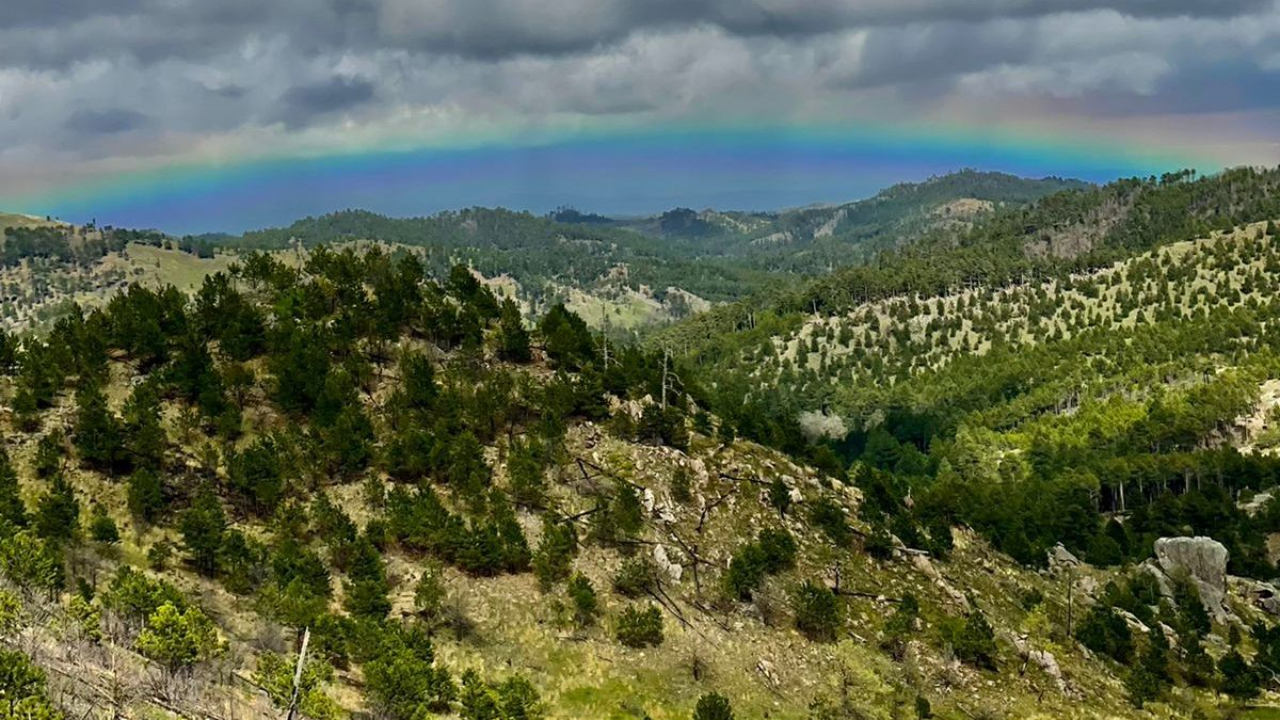
A friend was sorting through a deck of animal spirit cards. The premise is simple: if a particular animal appears in our lives through a sighting, a dream, the drawing of a card, or some other unexpected encounter, it may be bringing a timely message. A reminder. An invitation. Perhaps even revealing something about our nature, our past, or the path before us. The meanings associated with each animal are said to be drawn from the wisdom of Indigenous traditions, often inviting us to begin something, let go of something, or simply pay closer attention.
Watching her got me thinking about how widespread practices like this are among human beings, and I began to wonder why.
Virtually every culture, in every age, has developed ways of seeking wisdom beyond logic and ordinary perception.
Astrology. Tarot cards. Oracle cards. Runes. The I Ching. Medicine cards. Casting lots. Bibliomancy. Numerology. Prayer. Contemplation. Dream interpretation. Tea leaves. Vision quests. Labyrinth walks. Meditation. Poetry. Martial arts. A solitary walk along the seashore. Palm reading. A hike through a forest. Climbing a mountain. Sitting quietly beside a campfire beneath a sky filled with stars.
The forms differ, but the impulse seems remarkably similar.
Human beings appear to possess a persistent longing to discover something more than what can be measured, weighed, or explained. Something larger than ourselves. Something that connects us to a deeper reality.
Whether we are seeking guidance for the future, meaning in the present, or putting our past in some kind of meaningful context, these practices seem to arise from the same yearning: to remember that we belong to something greater than ourselves.
The Lakota express this beautifully in the phrase Mitákuye Oyás’iŋ, often translated as all my relations or we are all connected. It reflects a worldview in which everything belongs, and everything is connected at all times and in every way. People, animals, plants, rivers, mountains, clouds, stars, rocks, the earth, the sky, our ancestors, and generations still unborn.
It makes me wonder if many of our spiritual and symbolic practices are unconscious expressions of something we already know.
Perhaps, deep within us, we recognize what the Lakota have long taught. We are not separate from the world but participants in it. When we truly see a bird, a tree, a stone, a drop of water, or a sunrise, we are not merely observing an object. We are catching a glimpse of the whole. And of ourselves. The world becomes a mirror.
William Blake wrote of seeing “a world in a grain of sand and heaven in a wildflower.” Rumi suggested that the cosmos resides within the human soul. Buddhist teachings speak of the entire universe reflected in a single dewdrop. Jesus described the Kingdom of Heaven as being contained within a mustard seed.
Different traditions. Different metaphors.
Yet each points toward the same intuition: the infinite somehow resides within the finite.
Perhaps that is why these practices endure. They are less about predicting the future than about remembering something ancient that still lives within us. They are attempts to find our way back to an original belonging, E.T. trying to phone home.
I know I am arriving late to insights like these. Yet I find them delightful when they appear—not as ideas I have read or been taught, but as something quietly remembered.
For me, those moments most often occur when I am alone in the woods, especially in South Dakota’s Black Hills.
Among the pines and granite outcroppings, the boundaries separating things seem less solid than they once appeared. It is there that many of the great transitions of my life have unfolded—spiritual, vocational, and deeply personal.
I suspect each of us has places where our lives quietly changed forever.
For a brief moment, Mitákuye Oyás’iŋ no longer feels like a concept.
It feels like a memory.
Perhaps even an itinerary.
I imagine you’ve had experiences like this yourself.
I’d love to hear about them.
Witnesses matter.
A Brief Political Reflection
Years ago, I attended a lecture by a renowned scientist. As he spoke, a small drop of saliva formed at the corner of his mouth. The longer he talked, the more noticeable it became. Soon, the audience could scarcely hear what he was saying because everyone was distracted by what no one acknowledged.
That image has stayed with me.
As I watch the conduct of many of our national leaders today, I experience something similar. Sadness. Embarrassment. Compassion tempered by the suffering their decisions inflict upon others.
Perhaps what troubles me most is not that our nation is changing, but that I am seeing more clearly what has always been there.
Those who have long lived on the margins of American life know that much of what is happening today is not new. We celebrate ideals while too often denying many people the opportunity to fully participate in them.
What saddens me most is not our disagreements but our growing willingness to forget our connection to one another. We increasingly speak and act as though some people are outside the circle of “us.”
Yet if Mitákuye Oyás’iŋ holds any truth, there is no “them.”
There is only a larger “us.”
Whenever we diminish another person, we diminish ourselves.
Happy Birthday, America.
May we continue to strive to become the nation we have always hoped and held ourselves up to be—a nation whose promise finally includes everyone. I think it is important to remember who wasn’t included in the original Declaration of Independence with full rights of citizenship and the right to vote: women, Indigenous peoples, people of African ancestry, etc.
As I watched those 150 men march in masks in the 4th of July parade, it seems we are headed in the other direction.
Stay connected with news and updates!
Join our mailing list to receive the latest news and updates from our team.
Don't worry, your information will not be shared.