Donut Diplomacy
Oct 10, 2026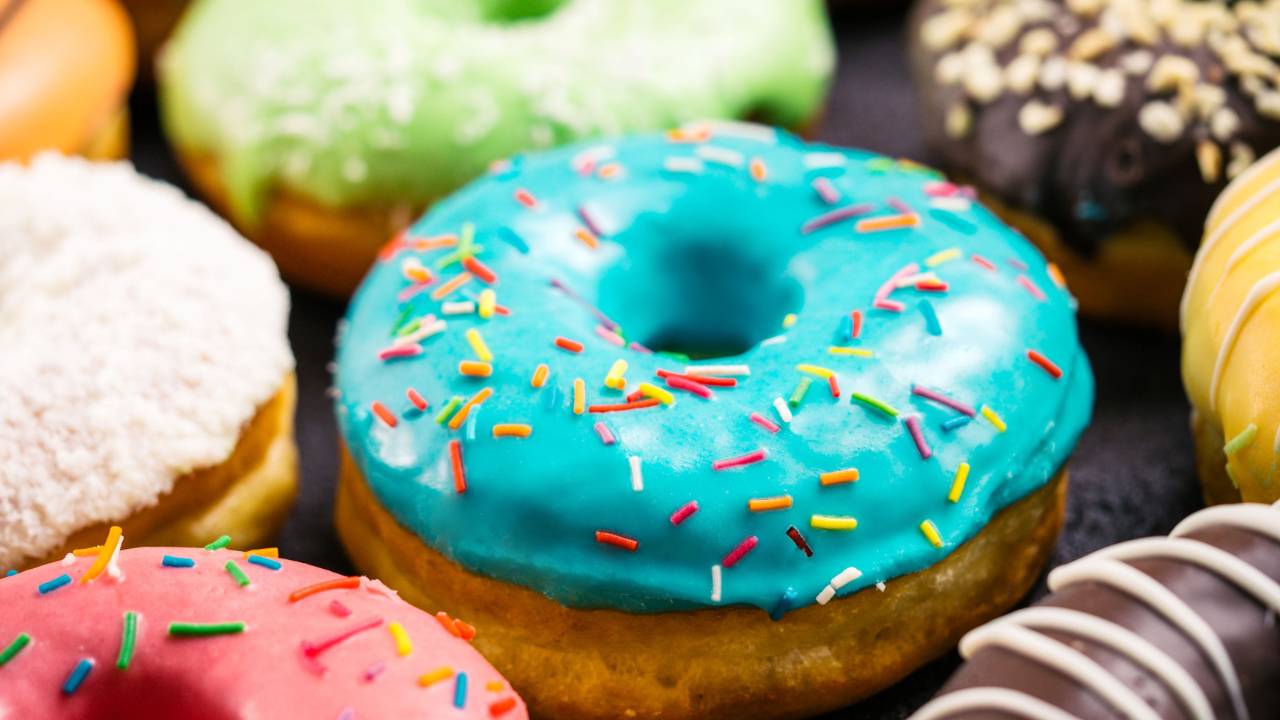
Recently, I went to visit a friend who was serving out some time in a rehabilitation facility. Going home soon, was the news.
As I walked toward her room, memories of being in similar places years ago washed over me. I wasn’t just walking down a hallway. I was walking through that part of my life again.
This facility is several levels above most. In fact, a plaque on the wall announced that it had recently received the highest rating possible from the state. The lobby was bright and cheerful. The outdoor seating areas were well tended. People were friendly enough.
But none of that was enough to keep the old memories away. Historic reels of sights and smells and sounds began playing in my head, and they weren’t pleasant ones.
For me, visiting someone in a hospital or care facility is challenging. I want to be there with them while, at the very same time, not wanting to be there with them.
Part of it, certainly, is the reminder of what might be my future.
There is a kind of diminished horizon in these places. Despite efforts made to brighten the surroundings, there often isn’t much hope hanging in the air. It feels a little like watching my football team down by 72 points with four minutes left in the fourth quarter. The game isn’t technically over. But everyone knows. The numbers suggest a forty percent loss.
And somewhere beneath my discomfort is the knowledge that one day a hallway like this may be mine. A room like hers may be mine. These may be the days and nights leading up to my own death.
There is a part of me that wants to leave these places as quickly as possible. And then I feel guilty because I can leave. There isn’t much I can do there to “help.” Sometimes there is nothing to fix. Nothing to solve. Nothing to make better. There is only the waiting. And the being there.
So, I fall back on something I have long believed to be true: there is value in simply being present. One of my guiding mantras is an old saying: You can pretend to care, but you can’t pretend to be there. Thankfully, there are many ways these days to “be there.” In this case, physically was one of them.
I always take food. Seldom nourishing. Always fun. And, without question, NOT on the approved menu. Love and food both have four letters, and to me they are nearly synonymous. Food, however, is considerably less ambiguous. Easily internalized.
When I arrived, my friend wasn’t quite sure who I was, where she was, why she was there, or how long she had been there. We talked about hospital delirium, a common phenomenon. I know it affects patients, I’m not entirely sure it doesn’t affect the staff as well. Similar in effect to solitary confinement?
We talked. We visited. I read her a poem I had written for her. After a few hours, I left. Yes, hours. She is my friend, after all. One who, decades ago, saved my bacon.
As I walked out, I felt sad. Passing some of the other residents and staff, the sadness deepened. And then it turned into anger. I felt powerless. I found myself grumbling about how a country as wealthy as ours can behave like a fourth or fifth world country when it comes to our elders. I can’t quite bring myself to say “how we treat our elders.” Sometimes there doesn’t seem to be enough “treatment” in it to deserve the word.
These are people who raised children, worked jobs, paid taxes, built communities, fought wars, taught school, loved people, buried people. And this is it? This particular woman has changed, for the good, millions of lives. Millions. And here she was. And there I was. Unable to do anything about it.
On the way home, I decided to stop for donuts for breakfast the next morning. You know: when in doubt, when deep in feelings, dose with a sugar bomb. Some people would crack open a beer. I don’t drink.
I pulled up to the donut shop, walked to the door, and found it locked. They had just closed. Of course. It’s that kind of day. I turned around and started back toward my car. Then a woman came out of the hair salon next door. “Did you come to get some donuts?”
This seemed like, let’s say, an unusual question. First, I had driven up to a donut shop, got out of my car, walked to the donut shop, and tried to open the door of the donut shop. So yes. It would be relatively safe to assume I had come for a donut. I’ve learned to keep most of my snarky thoughts to myself, so I just said, “Yes.” I muttered something about wanting them for breakfast, as though I needed to justify myself.
The second unusual thing was this person had just emerged from a hair salon. She explained that some high school students had taken most of the donut shop’s leftover donuts down to Pearl Street Mall to give to people experiencing homelessness, as they did every Sunday. The donut shop owner had given her the last couple dozen to pass out to her clients, and she was offering me some of her leftover donuts.
I tried to beg off. She insisted. I asked if she was sure. She was. Cool, I thought. I’ll get my two donuts after all. The day isn’t a total loss. I followed her into the hair salon.
The place was filled with women in various stages of whatever it is that happens to women in hair salons. The chatter suddenly stopped. All activity stopped. Everyone’s head turned towards me as if they were part of a synchronized swimming team. And they all stared at me. A bald man had entered THE sanctuary. Like a boy appearing in the girls locker room. No one seemed quite sure why.
As if to break the spell, the salon owner opened the donut box and said ‘here.’ I looked around for a Kleenex or something, couldn’t find anything, but reached in to take two donuts anyway.
“No,” she said. “You have to take them all.” All?” I asked. “Yes, all. Please, you’d really be helping me out. I don’t know what else I am going to do with them. We’ve taken all we can handle.”
A few moments later, I walked out of a beauty salon carrying eighteen donuts. I stood at my car door, looking down at the box. What in the world am I going to do with eighteen donuts? And then I saw my friend. She LOVES donuts, but 18 of them? Then I thought, THE NURSING HOME!!!!! THE STAFF!!!!!
Those tired-looking, distracted people doing a difficult and largely thankless job. Caring for people who may be confused. Frightened. Angry. Dying. Doing a job that no one else is able or willing to do. People who, for some of the residents, perhaps someday for my friend, or myself, may be among the last human beings they ever see.
The last people to bring them water. To adjust a blanket. To touch their shoulder. To say their name. To hear them call out in the night. I’ll take the donuts to them.
It meant driving about twenty minutes out of my way. But suddenly that was the answer. To what question, I couldn’t have told you. As I drove, something began happening inside me. I started feeling better. And the closer I got, the better I felt. I LOVE helping people, especially when it comes as a surprise. And especially if it involves food. (I consider donuts its very own unique food group.)
Then I remembered something a friend once told me - If you want something, practice giving it. At the time, they were chiding me about something I wanted from them. But driving back toward that nursing home, the words took on another meaning. It was another version of that old invitation. Be the change you want to see.
I had wanted compassion for my friend. I had wanted somebody to care. I had wanted kindness in that place. I wanted those people who worked there to get some appreciation. Maybe I could begin by bringing some. Even if, on this particular day, all of that was to arrive in a cardboard box filled with sugar.
I walked back into the nursing home and stopped at the reception desk. “I brought donuts for the staff,” I said. I asked the receptionist if she’d like one. She did. She thanked me several times with a HUGE smile.
Then I started walking down the same hallways I had walked out of not long before. Something was different. The hallway hadn’t changed. The smells hadn’t changed. The sadness hadn’t disappeared. The problems were all still there. I had changed.
With every step, I felt a little lighter. I stopped first at my friend’s room and offered her a donut. She took one. Then I carried the rest to the nursing station and told the staff the ridiculous story of how I had come to possess a box full of donuts. One of the women nearly ran toward me.
She looked at the box. Then she looked up at me. There were tears in her eyes. “I was just wanting a donut,” she said, “this exact donut, from this exact bakery.”
Gratitude. And suddenly I wondered, how often does anybody bring them donuts? How many of their encounters with residents, families, administrators, and visitors begin with a complaint? Something isn’t clean. Someone didn’t answer the call button. Mom needs her medication. Dad hasn’t been changed. Where is the nurse? Why isn’t somebody doing something?
Many of those complaints may be completely justified. But standing there looking into that woman’s eyes, I wondered what it must be like to work every day in a place where so much of what anybody says to you is about something you haven’t done. Or haven’t done well enough. Soon enough. Often enough.
A place where suffering is your work environment. Where death sits in a chair in every room. Maybe these people aren’t uncaring. Maybe they’re exhausted. Probably understaffed. Almost certainly underappreciated and underpaid. Maybe they feel as powerless inside that building as I had felt walking out of it.
I don’t know.
A box of donuts doesn’t excuse a broken elder-care system. It doesn’t fix understaffing. It doesn’t restore dignity where dignity has been lost. It doesn’t make death less frightening.
But something happened in that moment. For them. To me. I have no illusion that my friend will receive better care because I brought donuts to the staff. But I also don’t imagine she’ll receive worse care because someone working there felt noticed and appreciated, for a few minutes anyway. And I know something else.
The sad, angry, grumbling old man who had driven away from that nursing home feeling helpless was not the same man who drove away the second time. I had wished someone, somewhere would bring better things into that Rehab world that I had stepped into.
And for one small moment, I realized: I was someone. I was THAT someone.
Through a wonderfully ridiculous chain of events involving a dying friend, a sad and angry old man, a closed donut shop, a generous shop owner, a hair salon full of startled women, some high school students, and eighteen unwanted donuts, life handed me an opportunity to bring a little of what I had been wishing existed.
Maybe that is one small answer to powerlessness. When I want more kindness, give some. When I believe there should be more appreciation, even if it isn’t appreciation for me, offer some. When I think someone should notice, notice somebody. When I think someone should show more compassion, practice compassion. When I think there should be more humanity shown, do one small humane thing.
It won’t repair everything that is broken. It may not repair anything at all. But it changes what happens next. And sometimes, apparently, the distance between helplessness and hope is only twenty minutes in the wrong direction. With someone carrying a cardboard box. Filled with something glazed, frosted, custard-filled and covered with sprinkles.
Stay connected with news and updates!
Join our mailing list to receive the latest news and updates from our team.
Don't worry, your information will not be shared.